Back to blog
10 Best KnowBe4 Alternatives for Security Awareness Training (2026)

Written by
Brightside Team
Published on
You finally convinced leadership to invest in security awareness training. After months of research and demos, you picked KnowBe4 because everyone else uses it. But now you're six months in, and something feels off.
The pricing structure still confuses you. Your employees complain the training videos feel outdated. You spent three weeks just getting the platform configured. And despite KnowBe4's reputation, you can't shake the feeling that your $15,000 annual investment should deliver more than recycled content from 2019.
You're not alone. Security leaders across industries are questioning whether market dominance equals the right fit. User reviews on platforms like G2, Capterra, and Reddit reveal consistent frustrations with repetitive content, hidden pricing tiers, and limited coverage beyond email phishing. The platform works, but does it work for you?
This guide examines 10 alternatives that solve specific problems KnowBe4 doesn't address. You'll find platforms with transparent pricing, multi-channel attack simulations spanning email, voice, SMS and deepfakes, AI-powered personalization, and even solutions that reduce the employee data exposure attackers use to craft convincing phishing attempts. Some cost half as much. Others deploy in under two hours. A few eliminate the 25-user minimum that blocks smaller teams.
Whether you're evaluating options for the first time or reconsidering your current platform, you'll discover which alternative matches your organization's actual needs instead of just following the market leader.
Why Organizations Switch from KnowBe4
KnowBe4 built the security awareness training market. The company serves over 70,000 organizations and maintains the largest content library in the industry. While KnowBe4 has evolved to offer AI-driven training and continuously updated modules, user feedback reveals specific pain points that drive organizations to seek alternatives.
Pricing opacity frustrates buyers. KnowBe4 refuses to publish pricing publicly. Sales reps won't quote numbers until after discovery calls. When you finally get a proposal, you discover that basic features live in one tier, but the capabilities you actually need hide behind premium paywalls. Multiple Reddit threads document buyers who budgeted $3,000 based on competitor pricing, only to receive KnowBe4 quotes exceeding $10,000 for comparable features.
The 25-user minimum blocks small teams. Your company employs 12 people. You still face phishing threats. But KnowBe4 requires a 25-user minimum commitment, forcing you to pay for 13 phantom employees or look elsewhere. This policy makes sense for enterprise vendors, but it alienates the small and mid-sized businesses that need protection most.
Content can feel repetitive despite updates. While KnowBe4 emphasizes their AI-driven training and continuous content updates, users consistently report experiences with recycled scenarios. One IT director on Reddit described their situation: "We're in year three, and I swear my team has watched similar scenarios multiple times. We need more coverage of AI-generated phishing, deepfakes, and the evolving attacks we actually see." When threat landscapes evolve daily, keeping training content fresh remains a common challenge.
Setup complexity demands serious time. Multiple reviews mention spending two to four weeks just configuring the platform, integrating with Active Directory, and customizing campaigns. For organizations without dedicated security personnel, this initial burden delays protection and requires technical expertise many teams lack.
Email-focused training may leave blind spots. Modern social engineering spans phone calls, SMS messages, messaging platforms, and even deepfake videos. Organizations report that KnowBe4's primary focus on email phishing simulations leaves gaps. When attackers shift tactics to vishing campaigns targeting your finance team or AI-generated voice calls impersonating executives, your training may not have prepared employees to respond across all channels.
Manual campaign management creates ongoing work. While KnowBe4 offers automation features, many organizations report that effective campaigns still require significant administrative effort. You manually select templates, segment audiences, schedule sends, and analyze results. This ongoing burden adds up when you're managing quarterly campaigns across multiple departments.
These frustrations don't make KnowBe4 a bad platform. They highlight that different organizations need different solutions. The market leader optimizes for enterprise scale. Smaller teams, budget-conscious buyers, privacy-focused cultures, and organizations facing multi-channel threats need alternatives built for their specific challenges.
How We Evaluated These Alternatives
We didn't just compile a list of vendors. This comparison reflects research across user reviews, platform demos, pricing analysis, and verification against each platform's official website.
Pricing transparency mattered most. After documenting KnowBe4's opacity as a primary pain point, we prioritized platforms that publish clear pricing or provide straightforward quotes. Hidden costs waste everyone's time.
Multi-channel coverage separated leaders from followers. We evaluated whether platforms simulate attacks beyond email, including voice phishing (vishing), SMS phishing (smishing), messaging apps like Slack or Teams, and deepfake threats. Attackers use every communication channel available. Training should too.
AI capabilities indicated future readiness. Generative AI transformed social engineering overnight. Platforms leveraging AI for personalized simulations, content creation, or threat intelligence demonstrate they're building for tomorrow's threats, not yesterday's.
Implementation complexity determined real-world usability. We measured time from signup to first campaign, technical requirements, and ongoing administrative burden. Fast deployment and minimal maintenance matter, especially for resource-constrained teams. Our "Setup Time" metric represents the time to launch your first security awareness campaign after signup.
Organization size fit influenced recommendations. A platform perfect for 5,000 employees might overwhelm a 25-person company. We noted which solutions serve SMBs, mid-market, or enterprise segments best.
Unique differentiators revealed innovation. Every platform claims to stop phishing. We looked for distinctive approaches that solve problems competitors ignore, whether through OSINT scanning, behavioral science, real-time threat intelligence, or privacy-first architectures.
We pulled user testimonials from G2, Capterra, Reddit, and TrustPilot. We tested free trials when available. We verified all claims against official platform websites. This isn't a superficial vendor list. It's a practical buying guide based on documented evidence.
Quick Comparison: Top 10 Alternatives at a Glance
Platform | Best For | Starting Price | Unique Strength | Multi-Channel | Setup Time |
|---|---|---|---|---|---|
Hoxhunt | Enterprises Seeking Automation | ~€4.85/user/month | Behavioral Personalization | Email/Slack/Teams | 2-3 days |
Adaptive Security | AI Threat Focus | Custom pricing | Executive Deepfakes | Email/Phone/SMS | 1-2 days |
Brightside AI | SMBs & Privacy-Conscious Orgs | $0.50/user/month | OSINT + Training Hybrid | Email/Voice/Deepfake | <1 hour |
SoSafe | European Enterprises | Custom pricing | Behavioral Science | Email Primary | 2 days |
Proofpoint | Threat Intelligence Integration | $12-24/user/year | Email Security Suite | Email + SMS | 5-7 days |
NINJIO | Visual Learners | $1.50-2/user/month | Animated Training | Email Primary | 2-3 days |
Riot | Real-Time Monitoring | $6.89/user/month | Karma Score System | Multi-Channel | Minutes |
Jericho Security | Agentic AI Platform | $3-4.50/user/month | AI-Generated Personas | Email/SMS/Deepfake | 3-5 days |
Cofense | Phishing Defense Specialists | $10+/user/year | Threat Detection | Email Primary | 3-5 days |
Mimecast | Existing Mimecast Customers | ~$8/user/month | Integrated Suite | Email Primary | 5-7 days |
Now let's examine each platform in detail, starting with the most distinctive alternatives.
Detailed Platform Reviews
1. Hoxhunt: Automated Behavioral Personalization
Hoxhunt eliminates the manual campaign management that burdens KnowBe4 administrators. The platform uses automated personalization to adapt training difficulty to each employee's skill level, delivering progressively challenging simulations as users improve.
The behavioral approach drives measurable results. Organizations using Hoxhunt report that employee success rates in identifying phishing attempts jump from 34% baseline to 74% after 12 months. Failure rates drop 5.5 times, from 11% down to 2%. Real threat reporting surges 10 times within one year, meaning employees actively defend against genuine attacks, not just simulations.
Gamification elements including leaderboards, points, and achievement badges boost engagement rates from 10% to 70% in some implementations. The inbox-based delivery keeps training integrated into daily workflows rather than forcing employees into separate learning management systems.
The automation runs deeper than scheduled campaigns. Hoxhunt analyzes individual employee performance and automatically adjusts simulation difficulty, content focus, and delivery timing. High performers face sophisticated scenarios that keep them sharp. Struggling users receive foundational training without overwhelming complexity. This adaptive approach prevents both boredom and frustration.
Multi-channel coverage extends beyond email. Hoxhunt delivers phishing simulations across email, Slack, and Microsoft Teams, recognizing that modern workplaces communicate across multiple platforms. This approach trains employees to maintain security awareness regardless of which tool they're using.
Behavioral data reveals organizational risk patterns. The platform tracks which departments show vulnerability, which attack types employees miss most often, and how quickly teams improve over time. Security leaders get actionable intelligence about where to focus additional resources rather than generic completion statistics.
Integration with security operations centers transforms employee reporting. When workers flag suspicious messages, Hoxhunt's threat intelligence analyzes submissions and feeds genuine threats into organizational defenses. Employees become active sensors in your security infrastructure, not just training participants.
Best for: Enterprise organizations with 500+ employees needing scaled automation, companies willing to invest in sophisticated behavioral analytics, and security teams seeking deep integration between training and threat detection.
Limitations: Custom enterprise pricing requires sales engagement. Despite automation, ongoing administrative oversight remains necessary to optimize campaigns and interpret analytics. Coverage focuses on digital communications rather than voice-based attacks.
Pricing: Approximately €4.85/user/month for 100 users; varies by organization size and features.
2. Adaptive Security: AI-Powered Deepfake Defense
Adaptive Security specializes in emerging AI-driven threats that traditional platforms miss. The company, backed by OpenAI and a16z with $43M in Series A funding, pioneered executive deepfake simulations that fundamentally change how employees think about trust and verification.
Customers describe deepfake scenarios as "huge wake-up calls." Watching a realistic AI-generated video of your CEO requesting urgent wire transfers forces employees to rethink authentication procedures in ways that generic training can't achieve. These simulations don't just test knowledge. They create visceral experiences that change behavior.
The AI content creator generates customized training modules in seconds. Security teams describe scenarios specific to their industry, threat profile, or recent incidents. Adaptive's AI builds complete training modules tailored to those parameters without requiring video production, script writing, or extensive development time. This agility keeps content current as threats evolve.
Spear phishing simulations leverage company OSINT data to mirror actual attacker reconnaissance. The platform researches your organization the same way adversaries do, then crafts simulations using that intelligence. Employees face scenarios that feel genuinely targeted rather than obviously fake templates they learn to recognize and dismiss.
Multi-channel coverage spans email, phone, and SMS using AI-driven personas that maintain consistent identities across interactions. An attacker might send an email, follow up with a phone call, then text a confirmation link. Adaptive trains employees to recognize coordinated attacks across platforms.
Integration spans over 30 partners across HRIS, security, and administrative systems. The phish reporting button includes AI-powered triage that automatically categorizes incidents and resolves false positives, reducing security operations workload. Genuine threats get escalated immediately. Benign messages get handled without analyst intervention.
Best for: Organizations prioritizing AI threat preparation, security-conscious industries facing sophisticated attacks, companies needing cutting-edge simulation realism, and teams seeking rapid custom content creation.
Limitations: As a newer platform, the customer base is smaller than 15-year-old competitors. AI-centric approach requires cultural readiness to embrace advanced techniques that may initially unsettle employees. Custom pricing requires sales engagement rather than transparent published rates.
Pricing: Custom quotes based on organization size and feature selection.
3. Brightside AI: Training Plus Digital Footprint Protection
What makes Brightside different? Most platforms on this list train employees to spot phishing. Brightside reduces the exposed employee data attackers use to craft convincing phishing attempts in the first place.
The Swiss cybersecurity company combines traditional security awareness training with OSINT-powered digital footprint scanning. Employees receive insights into what personal information exists publicly across six categories: personal information, data leaks, online services, personal interests, social connections, and locations. The platform then guides them through reducing that exposure with a gamified AI companion called Brighty.
Think about how attackers actually build spear phishing campaigns. They research targets on LinkedIn, find personal emails on data broker sites, discover family connections through social media, and identify interests from forum posts. They use that intelligence to craft messages so personalized that employees can't distinguish them from legitimate communication. Brightside addresses this problem at the source by helping employees reduce their exposed data before attackers weaponize it.
The privacy-first architecture builds trust. Company security admins receive anonymized, aggregated views of organizational risk without accessing individual employee details. This approach addresses common employee concerns that security platforms become surveillance tools rather than genuine protection.
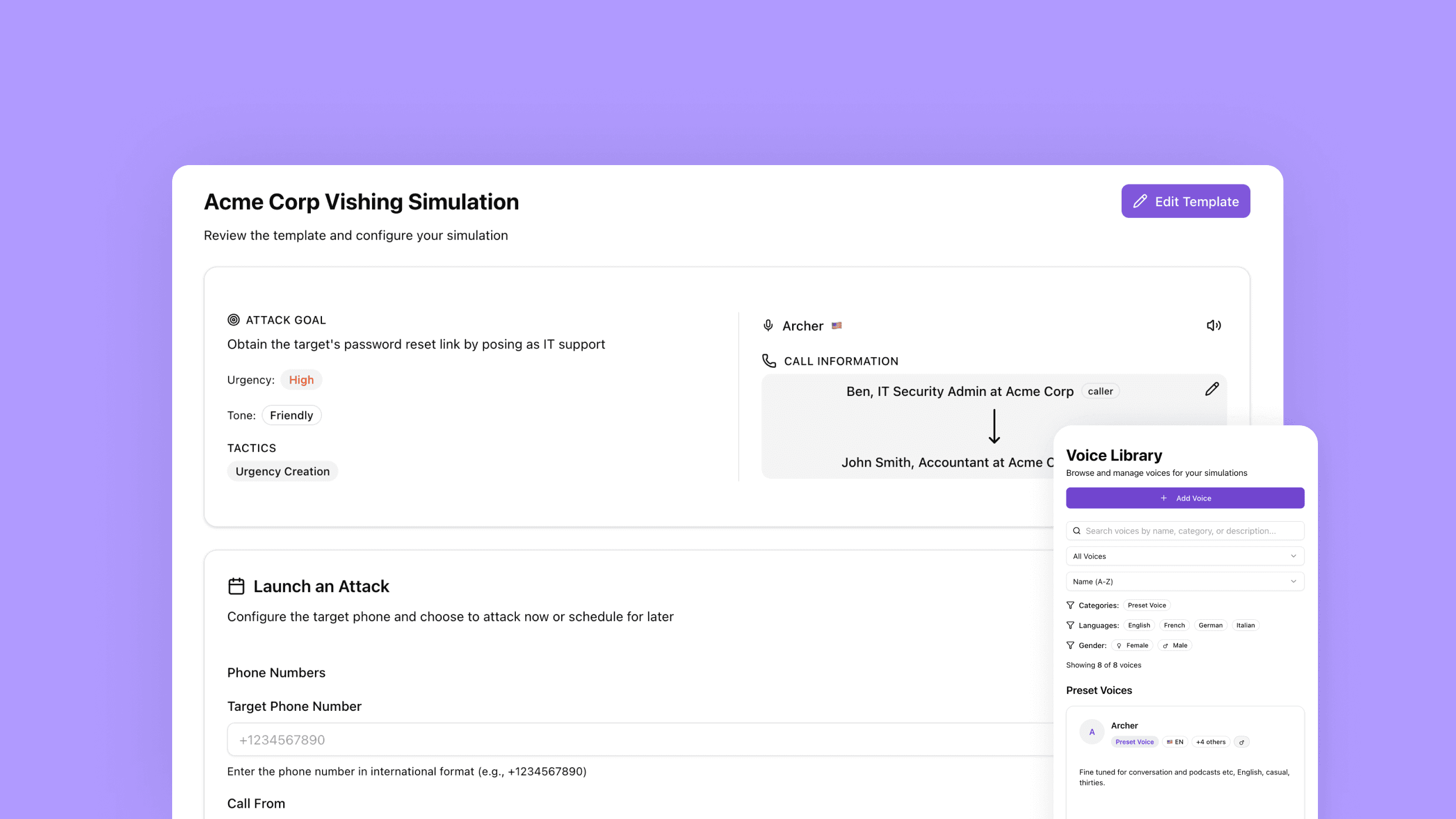
Multi-channel simulations cover all attack vectors. Brightside offers email phishing simulations powered by AI that use real OSINT data for personalization, vishing simulations that test voice-based social engineering, and deepfake training that prepares teams for AI-generated video and audio attacks. Your employees face threats across every communication channel.
Transparent pricing addresses the KnowBe4 frustration. Plans start at $0.50 per user monthly for template-based simulations and scale to $3.90 for complete coverage including vishing, deepfakes, and full OSINT scanning. No sales calls required to see costs. No 25-user minimums. No hidden fees for features you discover later.
Deployment happens quickly. Organizations report getting started in under an hour, including domain verification and initial campaign setup. This contrasts sharply with the multi-week implementations other platforms require.
Data broker removal provides proactive defense. Brightside identifies which data brokers hold employee information and automates removal requests. This reduces the intelligence available to attackers before they even start crafting targeted campaigns. Among security awareness training platforms, this capability remains unique to Brightside.
Best for: Small to mid-sized businesses, privacy-conscious organizations, European companies valuing Swiss data protection standards, teams needing transparent pricing, and organizations wanting fast deployment without complex setup.
Limitations: Reporting depth doesn't match KnowBe4's 60+ report types, though core metrics cover primary security needs. As a newer market entrant, Brightside has a smaller customer base and fewer case studies than established competitors.
Pricing: $0.50 to $3.90 per user monthly based on features needed. Free tier available for basic courses.
4. SoSafe: European Behavioral Science Leader
SoSafe grounds its methodology in cognitive psychology, learning science, and behavioral economics. This scientific foundation achieves behavioral change at double the speed of standard training, with organizations reporting 74% reductions in phishing interaction and 80% drops in click rates within six months.
The Sofie AI chatbot provides instant interventions and bite-sized learning precisely when employees need guidance. Gamification, microlearning, spaced repetition, and interactive storytelling make complex concepts accessible. The platform supports 27 languages, enabling multinational corporations to deliver culturally relevant training across diverse workforces.
Behavioral analytics reveal insights into user engagement, cultural influences, motivational factors, and emotional responses shaping security decisions. Organizations report vulnerability scores climbing from 65 to 91 within months as the platform identifies and addresses specific psychological barriers to secure behavior.
The microlearning approach respects employee time. Instead of hour-long annual training sessions that employees rush through, SoSafe delivers 3-5 minute modules that integrate into daily workflows. This cadence maintains engagement without triggering the fatigue that plagues traditional programs.
Spaced repetition ensures long-term retention. The platform schedules reinforcement training at scientifically optimal intervals, converting short-term awareness into lasting behavioral change. Employees don't just complete training and forget it. They build habits that persist.
Fast implementation delivers quick value. SoSafe emphasizes a 2-day go-live timeframe with managed-service options that reduce the burden on internal teams. This rapid deployment gets protection in place faster than platforms requiring weeks of configuration.
Best for: European enterprises prioritizing behavioral science approaches, multinational corporations needing extensive language support, organizations valuing academic research foundations, and teams seeking scientifically validated training methodologies.
Limitations: Initial setup complexity and limited customization frustrate some users despite the fast go-live timeframe. Dashboard provides less granular tracking than competitors like KnowBe4. Mobile and offline functionality lags behind cloud-native platforms. Some global organizations suggest that despite broad language support, content could be more tailored to regional compliance requirements and cultural contexts.
Pricing: Custom pricing based on organization size, competitive with mid-range enterprise platforms.
5. Proofpoint: Threat Intelligence Integration
Proofpoint leverages its market-leading position in email security to deliver training informed by real-world threat intelligence. Content and simulations reflect actual attack patterns the company observes across its customer base, ensuring training prepares employees for genuine threats rather than hypothetical scenarios.
The seamless integration with Proofpoint's email security solutions creates a unified defense view for existing customers. When the email security system blocks a sophisticated phishing attempt, that intelligence feeds into training simulations so employees learn to recognize similar patterns. Content personalization adapts learning paths based on user susceptibility, targeting training where it delivers maximum impact.
Strong analytics quantify security posture improvements, supporting ROI justification to executive stakeholders. The reporting framework translates training metrics into business language that boards understand, showing risk reduction in financial terms rather than just completion percentages.
Compliance modules address regulatory frameworks including HIPAA, GDPR, PCI DSS, and industry-specific mandates. Healthcare organizations find pre-built content covering patient data protection. Financial services get modules addressing transaction security and fraud prevention. These specialized libraries streamline audit preparation.
ThreatSim phishing simulations span email and SMS channels with realistic scenarios grounded in Proofpoint's extensive threat data. Organizations gain confidence that training prepares employees for actual attacks rather than generic templates divorced from current adversary tactics.
Best for: Organizations already using Proofpoint email security seeking integrated solutions, enterprises needing regulatory compliance content, teams valuing real-world threat intelligence, and companies wanting unified security management.
Limitations: Complex setup and steep learning curve challenge resource-constrained teams. Customer support delays and documentation gaps frustrate administrators attempting to configure advanced features. Training follows a broader approach rather than deep individual personalization. Premium pricing at $12-24 per user annually exceeds budget-friendly alternatives.
Pricing: $12 to $24 per user annually, with exact costs depending on feature tier and integration requirements.
Platforms 6-10: Quick Overviews
6. NINJIO: Animated Storytelling for Engagement
NINJIO uses animated episodic content designed for visual learners who struggle with text-heavy training. Short 3-4 minute videos feature storylines that make concepts memorable. Characters face security dilemmas employees recognize from their own work environments. The storytelling approach drives engagement and completion rates without requiring extensive administrative oversight.
Best for: Organizations prioritizing engagement over comprehensive feature sets, teams with employees resistant to traditional training, and companies seeking content that doesn't feel like mandatory compliance.
Pricing: Starting at $1.50-$2 per user monthly.
7. Riot: Real-Time Security Posture Management
Riot introduces real-time employee security posture management with an integrated Karma score tracking company-wide progress. The platform monitors employee security behaviors across multiple dimensions and consolidates them into a single metric that executives can track. Multi-channel support includes various communication methods, and rapid deployment appeals to growing companies.
Best for: Organizations wanting simplified executive reporting, teams seeking real-time security visibility, and companies valuing streamlined management.
Pricing: $6.89 per user monthly (paid annually). Platform ready in 5 minutes.
8. Jericho Security: Agentic AI Platform
Jericho Security positions itself at the cutting edge through agentic AI that generates hyper-realistic, infinitely individualized attack simulations. The platform learns about organizations and uses generative AI to create simulations that feel like interacting with real people, testing employees against convincing connections rather than obvious phishing attempts. Multi-channel coverage explicitly includes email, SMS, and deepfake threats. AI-suggested tactics continuously evolve to outpace changing threat landscapes.
Best for: Organizations facing sophisticated threats, companies prioritizing cutting-edge AI simulation technology, and teams needing adaptive attack scenarios.
Pricing: Starting at $3-$4.50 per user monthly.
9. Cofense: Phishing Defense Specialists
Cofense focuses specifically on phishing defense with sophisticated threat detection capabilities. The platform excels at identifying real threats reported by employees and feeding that intelligence back into training. When workers submit suspicious emails, Cofense analyzes them and shares verified threats across its customer network. This crowdsourced intelligence keeps simulations current with actual attack patterns.
Best for: Security-mature organizations seeking specialized phishing expertise, companies facing advanced persistent threats, and teams wanting deep integration between employee reporting and threat intelligence.
Pricing: Starting at $10 per user annually.
10. Mimecast: Integrated Security Suite
Mimecast offers integrated security awareness training for existing email security customers. The value proposition centers on unified management rather than best-in-class training features. Organizations already committed to Mimecast's email security, archiving, and continuity solutions can add awareness training without managing multiple vendor relationships.
Best for: Organizations already using Mimecast email security, companies prioritizing vendor consolidation, and teams wanting single-pane-of-glass management.
Pricing: Starting around $8 per user monthly.
Finding the Right Alternative for Your Needs
The best KnowBe4 alternative depends on your specific situation. Here's how different organizations should prioritize:
For small businesses under 50 employees: Brightside AI, Riot, and NINJIO offer accessible options. Brightside's transparent $0.50-$3.90 per user pricing and rapid deployment make it particularly accessible for smaller teams. Riot's streamlined approach works well for growing companies. NINJIO's engaging content drives completion without extensive administrative oversight.
For transparent pricing: Brightside AI, NINJIO, Riot, Jericho Security, Cofense, and Proofpoint publish clear pricing without requiring sales engagement. If you're tired of discovery calls just to learn costs, these platforms respect your time with straightforward numbers.
For multi-channel simulations: Adaptive Security, Brightside AI, Jericho Security, and Riot offer comprehensive coverage across email, voice, SMS, messaging apps, and emerging threats. Most competitors remain email-focused, leaving gaps in your training coverage. If your organization faces vishing campaigns or worries about deepfake attacks, prioritize platforms testing those skills.
For AI-powered threats: Adaptive Security and Brightside AI lead in preparing teams for AI-generated attacks. Adaptive specializes in executive deepfakes and AI content creation. Brightside uses AI to personalize email phishing with real OSINT data and offers deepfake training modules. Jericho Security emphasizes agentic AI for infinitely individualized simulations.
For privacy-conscious organizations: Brightside AI offers a distinctive approach with privacy-first architecture that provides administrators anonymized, aggregated views while empowering employees to manage their own digital footprint exposure. This approach builds trust rather than creating surveillance concerns.
For employee engagement: Hoxhunt's gamification drives industry-leading participation rates, with some organizations reporting jumps from 10% to 70% engagement. NINJIO's animated content appeals to visual learners. Brightside's Brighty companion makes remediation feel less like homework and more like a helpful guide.
For European companies: SoSafe dominates the European market with behavioral science foundations and 27-language support. Brightside AI brings Swiss cybersecurity standards and data protection culture that resonates with EU organizations.
For fast deployment: Brightside AI, SoSafe, and Riot lead in rapid implementation. Brightside deploys in under an hour in typical scenarios. SoSafe emphasizes 2-day go-live. Riot is ready in 5 minutes. If you need protection quickly without multi-week implementation projects, these platforms deliver immediate value.
For digital footprint protection: Among security awareness training platforms, Brightside AI uniquely addresses employee data exposure through OSINT scanning and data broker removal. If you want to reduce the attack surface instead of just training employees to defend against it, this capability matters.
Mapping KnowBe4 Problems to Solutions
Still unsure which alternative fits? Here's how specific KnowBe4 frustrations map to recommended solutions:
Problem: Hidden pricing and complex quote processes
Try Brightside AI with published tiered pricing from $0.50-$3.90 per user, NINJIO at $1.50-2 per user, Riot at $6.89 per user, or Proofpoint's $12-24 per user range. All eliminate sales call requirements just to learn costs.
Problem: Content feels repetitive despite updates
Adaptive Security creates custom content in seconds with AI. Jericho Security generates infinitely individualized simulations. Both keep training fresh without relying on static content libraries.
Problem: Email-focused training missing vishing and deepfakes
Adaptive Security, Brightside AI, Jericho Security, and Riot offer multi-channel simulations. Train your team against the full spectrum of social engineering across email, voice, SMS, messaging apps, and video.
Problem: 25-user minimum blocks small teams
Brightside AI, NINJIO, Riot, Jericho Security, and other platforms eliminate minimum user requirements. Small businesses get quality protection without paying for phantom employees.
Problem: Manual campaign management burden
Hoxhunt automates personalization and campaign delivery. Adaptive Security's AI handles content creation. Both reduce administrative overhead significantly.
Problem: Complex setup taking weeks
Brightside AI deploys rapidly, often within an hour. Riot is ready in 5 minutes. SoSafe emphasizes 2-day go-live. Adaptive Security follows with 1-2 day implementations. Start protecting your team immediately.
Problem: Generic simulations employees quickly recognize
Adaptive Security's AI personas create convincing interactions. Brightside AI uses real employee OSINT data to craft realistic scenarios. Jericho Security generates infinitely individualized attacks. Generic templates stop working once employees learn the patterns.
Problem: Poor engagement and completion rates
Hoxhunt's gamification increases participation dramatically. Brightside's Brighty companion makes privacy protection engaging. NINJIO's animated content appeals to reluctant learners.
Problem: Limited preparation for AI-powered attacks
Adaptive Security specializes in deepfake simulations and AI threats. Brightside AI offers deepfake training and AI-generated spear phishing. Jericho Security uses agentic AI for adaptive scenarios.
Problem: Limited multi-platform coverage beyond email
Hoxhunt delivers simulations across email, Slack, and Teams for modern workplace communications. Adaptive Security and Jericho Security cover phone and SMS. Brightside AI includes voice phishing simulations.
" height="5000.014289657591px" id="KrZEL4sI2" stroke-dasharray="" stroke-linecap="round" stroke-linejoin="bevel" stroke-width="50" stroke="rgb(165, 140, 255)" transform="translate(50 50)" width="5000px"/></svg>)
Try our vishing simulator
Experience the most advanced voice phishing simulator built for security teams. Create scenarios, test voice cloning, and explore automation features.
Making Your Decision
KnowBe4's market leadership doesn't automatically make it the right choice for your organization. The platform optimizes for enterprise scale, extensive content libraries, and brand recognition. But smaller teams, budget-conscious buyers, privacy-focused cultures, and organizations facing multi-channel threats need different solutions.
Start by identifying your primary pain point. Is it pricing transparency? Multi-channel coverage? Fast deployment? Employee engagement? Digital footprint exposure? Match that priority to platforms solving your specific problem.
Consider requesting trials from your top two or three choices. Many platforms offer free trials or demos that let you test functionality before financial commitment. Evaluate how quickly you can launch campaigns, how employees respond to content, and whether reporting meets your needs.
Don't let fear of change trap you in a mediocre solution. The average data breach costs $4.88 million. Preventing even a single incident through better training justifies switching platforms. Security awareness training exists to reduce risk, not to check compliance boxes with a brand name everyone recognizes.
The right alternative solves your actual problems instead of just offering features you'll never use. For many organizations, that means embracing platforms built for today's threats rather than legacy approaches.
Whether you choose Hoxhunt's behavioral automation, Adaptive Security's AI threat focus, Brightside AI's unique OSINT-powered approach, or another alternative, you're making an active decision based on your needs. That beats sticking with KnowBe4 just because everyone else does.
Start with transparent pricing. Prioritize fast deployment. Demand multi-channel coverage that matches how attackers actually operate. And consider whether training employees to spot phishing matters less than reducing the employee data exposure that makes convincing phishing possible in the first place.
Your security awareness program should empower your team, not burden them. Choose the platform that delivers on that promise.